+86-136-0073-8328 nancy.huang@geotegrity.com
- All
- Product Name
- Product Keyword
- Product Model
- Product Summary
- Product Description
- Multi Field Search


Views: 0 Author: Site Editor Publish Time: 2026-07-15 Origin: Site


Enterprise procurement and sustainability officers face intensifying pressure today. They must meet aggressive environmental, social, and governance (ESG) targets while carefully managing daily operational budgets. You cannot afford to choose packaging solutions carelessly. The global shift away from conventional plastic and expanded polystyrene (EPS) is accelerating rapidly. Switching to plant-based alternatives represents more than just a positive brand initiative. It is now a strict regulatory compliance necessity across multiple international markets. Governments are banning single-use plastics, forcing a massive industry pivot.
Transitioning an entire supply chain requires looking far beyond basic "eco-friendly" claims. You need hard data to back up your material choices. This guide breaks down the verifiable carbon impact, operational realities, and procurement frameworks necessary to evaluate and scale bagasse tableware. We will show you exactly how to make a confident, sustainable swap without disrupting your business operations.
Carbon Economics: Biodegradable bagasse pulp plates leverage agricultural byproduct (sugarcane waste), significantly lowering Scope 3 emissions compared to virgin paper or petroleum-based plastics.
Operational Parity: High-density molded bagasse meets commercial durability requirements (moisture, grease, and microwave resistance) without relying on traditional plastic linings.
Compliance Baselines: Verified B2B procurement demands strict adherence to composting standards (e.g., BPI, EN 13432) and PFAS-free certifications to mitigate regulatory and greenwashing risks.
Rollout Strategy: Successful wholesale integration requires staged pilot testing, clear end-of-life disposal infrastructure analysis, and strategic MOQ planning.
Procurement teams cannot claim carbon reduction without analyzing the complete Life Cycle Assessment (LCA) of their packaging choices. A surface-level green claim falls apart under regulatory scrutiny. You must understand the exact origin, manufacturing journey, and end-of-life impact of your materials. Evaluating Biodegradable Bagasse Pulp Plates requires looking at empirical data rather than marketing rhetoric.
Detail how bagasse upcycles existing agricultural waste. It relies entirely on the fibrous sugarcane pulp left over after juice extraction. This process effectively bypasses the severe deforestation footprint of virgin paper plates. It also avoids the highly destructive fossil fuel extraction required for manufacturing polystyrene and polypropylene plastics. You repurpose a waste stream into a functional product. Sugar mills previously burned this fibrous waste or left it to rot in fields. By converting it into tableware, we capture its utility and prevent immediate carbon release.
Let us look at the pulping and thermoforming process. We must note transparently that molding operations do require energy. Facilities crush the fibers, create a slurry, and use high-heat thermoforming presses to shape the final items. However, the overall greenhouse gas (GHG) output remains structurally lower than polymer synthesis. Petroleum cracking and plastic resin polymerization consume vast amounts of energy and release toxic byproducts. Bagasse manufacturing utilizes mechanical heat and pressure, keeping the fundamental chemical structure of the cellulose intact.
Clarify the carbon loop. Bagasse decomposes into organic matter under proper commercial composting conditions. It sequesters carbon back into the soil, acting as a regenerative nutrient. Landfilled plastics, conversely, take centuries to break down. Even worse, plastics simply fracture into microplastics. If organic materials end up in a traditional landfill lacking oxygen, they emit methane. Therefore, proper composting infrastructure remains crucial to realize the full environmental benefits of agricultural waste packaging.
| Life Cycle Stage | Bagasse Pulp | Virgin Paper | Conventional Plastic (PS/PP) |
|---|---|---|---|
| Raw Material Origin | Agricultural byproduct (Sugarcane waste) | Timber harvesting (Deforestation risk) | Fossil fuels (Petroleum extraction) |
| Manufacturing Process | Pulping and thermal pressing | Chemical pulping and bleaching | Polymerization and extrusion |
| End-of-Life Disposal | Compostable (Returns to soil) | Recyclable or Compostable | Landfill or Incineration (Microplastic risk) |
| Estimated Decomposition | 90-180 days (Commercial facility) | 1-5 years (Depends on linings) | 400+ years |
Sustainable products only succeed if they match the mechanical performance of legacy materials. High-stress hospitality, catering, and institutional settings demand absolute reliability. Kitchen staff cannot serve hot meals on plates prone to collapsing. Procurement managers must establish stringent success criteria before authorizing a supply chain shift.
You must analyze high-heat tolerance thoroughly. Premium bagasse products typically tolerate up to 100°C (212°F) for boiling water and 120°C (248°F) for hot oil. This makes them perfectly suitable for hot buffets, heavy gravies, and microwave reheating. Furthermore, we must discuss the rigidity of molded pulp. It heavily outperforms flimsy traditional paper plates. High-pressure thermoforming creates incredibly dense fiber walls. This structural integrity prevents bending under heavy portion weights, eliminating the "floppy plate" disaster often experienced at catered events.
Address the massive industry shift away from fluorinated chemicals. Per- and polyfluoroalkyl substances (PFAS) historically gave paper and molded fiber products their legendary grease resistance. Regulators now classify them as "forever chemicals," leading to widespread bans. You must source materials utilizing modern, compliant sizing agents.
Innovative manufacturers now use natural bio-waxes and advanced structural density techniques to prevent leakages. They achieve superb grease resistance entirely without toxic additives. Sourcing Biodegradable Bagasse Pulp Plates from compliant vendors guarantees you avoid regulatory fines and PR disasters associated with PFAS contamination.
Test samples using your menu's most acidic and oil-heavy food items.
Measure structural integrity after 30, 60, and 90 minutes of holding time.
Verify microwave safety using standardized kitchen reheating protocols.
Ensure staff evaluate the grip and handling of the plates during high-volume service.
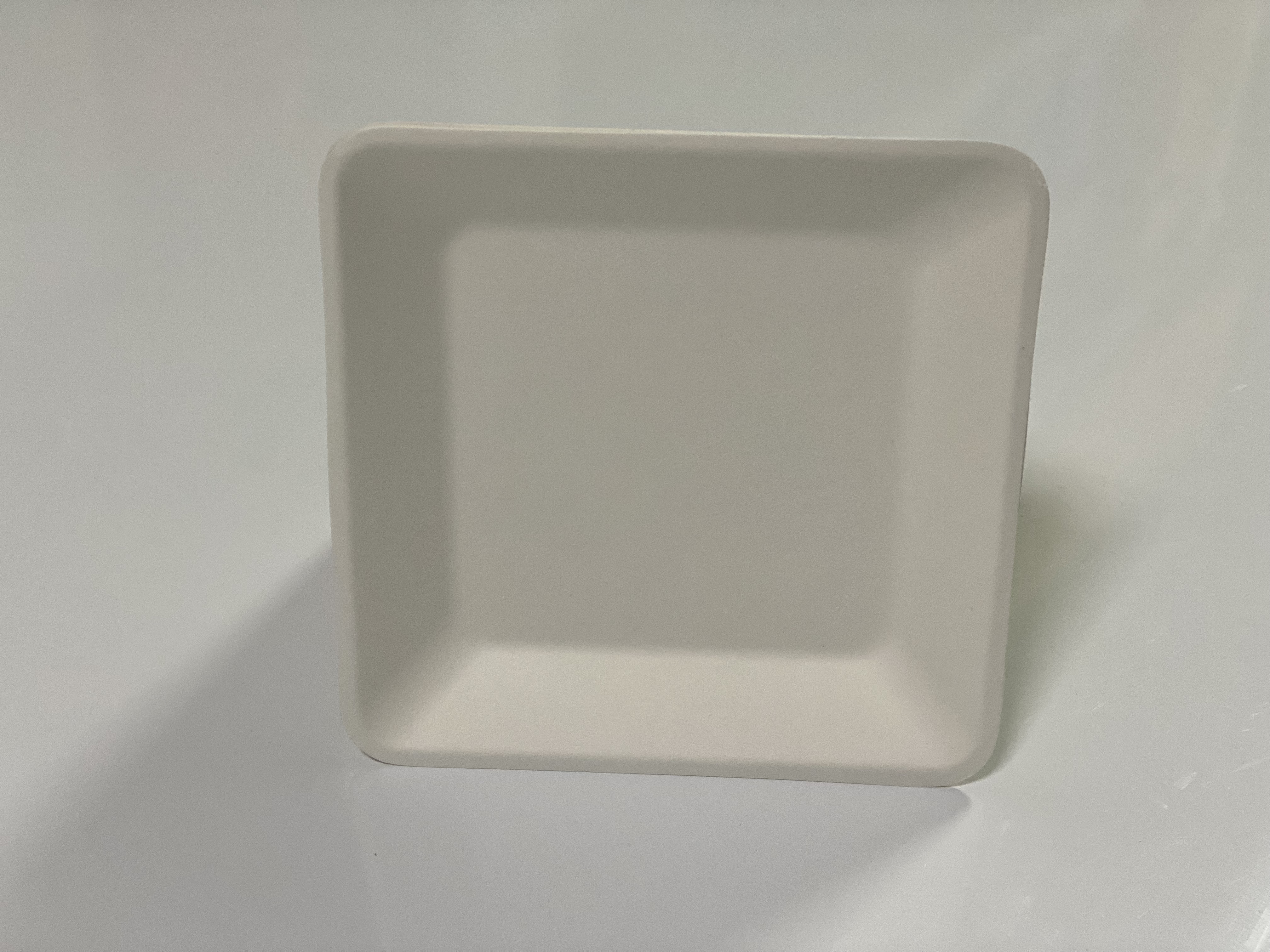
"Biodegradable" remains a broad term carrying severe legal risks if left unsubstantiated. Procurement requires standardized, third-party verification to shield the organization from greenwashing accusations. Consumers and regulators alike demand absolute transparency. You need concrete proof validating every environmental claim.
Break down the required certifications for shortlisting suppliers. You cannot rely on vendor promises alone. Ensure your sourcing contracts mandate current, verifiable certification numbers.
BPI (Biodegradable Products Institute): This represents the premier North American standard for commercial compostability. BPI certification guarantees the product breaks down efficiently in large-scale municipal facilities.
EN 13432 / OK Compost: These serve as the strict European baselines. They dictate exact biodegradation timeframes (typically 90% disintegration within 12 weeks) and guarantee the resulting compost exhibits non-toxicity to soil and plant life.
Confirm FDA or equivalent European Food Safety Authority (EFSA) compliance for direct food contact. Heavy metals, microbiological contaminants, and unapproved chemical sizing agents pose serious public health risks. A reputable wholesale partner will readily provide independent laboratory testing results proving food-safe compliance across their entire catalog.
Highlight the importance of ISO 9001 (Quality Management) and ISO 14001 (Environmental Management) certifications. A supplier's manufacturing facilities must prove operational excellence. ISO certifications demonstrate a manufacturer runs a tight, auditable operation. They track raw materials from the sugarcane field through the pulping machines and onto the final shipping pallets.
Moving from regional plastic suppliers to specialized bagasse manufacturers introduces distinct supply chain variables. You cannot treat plant-based fibers exactly like synthetic polymers. Procurement teams must adapt their logistical models to accommodate organic materials.
Unlike plastic, natural pulp products are highly sensitive to extreme humidity. You must establish baseline requirements for climate-controlled warehousing. If stored in damp, unventilated conditions, organic fibers absorb ambient moisture and lose their structural rigidity. Outline expected shelf-life limits clearly. In dry, well-ventilated warehouses, these products typically maintain optimal performance for 12 to 24 months. Ensure your inventory turnover strategies align with this specific expiration window.
Analyze the nesting capabilities of bagasse plates. High-pressure thermoforming creates exceptionally uniform shapes. This precision allows for incredibly high stack density inside shipping cartons. High stack density drastically reduces pallet volumes. It directly lowers transportation emissions and cuts overseas freight costs. You fit more units per shipping container, optimizing your global logistics footprint.
Outline the trade-offs between standard tooling and customized orders. Standard molds provide significantly faster lead times and lower Minimum Order Quantities (MOQs). This route works perfectly for rapid deployment. However, custom debossing and branding require higher initial tooling investments. They also demand extended manufacturing timelines. If your marketing team insists on debossed logos, factor in an additional four to six weeks for custom mold fabrication and prototype approval.
Ordering massive quantities without verifying warehouse humidity controls.
Failing to account for extended lead times during peak agricultural harvest seasons.
Assuming custom branding carries the same MOQ as standard unbranded items.
Overlooking the inclusion of desiccant packs in ocean freight containers.
Transitioning an enterprise supply chain requires a methodical, calculated approach. You should never execute a global material swap overnight. Implement a structured framework to mitigate operational risks and ensure widespread stakeholder acceptance.
How do you narrow down vendor proposals? Base your decisions on transparent metrics. Evaluate their maximum production capacity to ensure they can scale alongside your business. Scrutinize quality consistency by requesting samples from different production runs to check for batch-to-batch variance. Demand transparent ESG reporting from your partners. A reliable vendor will willingly share their internal carbon and water usage metrics.
We highly recommend starting within a closed-loop environment. Test the products in a corporate cafeteria or during a single regional event. Gather direct consumer feedback regarding the eating experience. Do knives cut through the plate? Does soup soak into the fiber? You must test these variables actively. Verify waste management compatibility before committing to a national rollout. A pilot phase exposes logistical bottlenecks early.
Emphasize that carbon benefits maximize only if the end-user accesses commercial composting facilities. Advise your team to map out the disposal infrastructure across your target markets. Engage local waste brokers and hauling companies early in the planning process. Ensure they accept BPI-certified materials in their organic streams. If local facilities reject the materials, you must rethink your end-of-life disposal strategy or push for local infrastructure upgrades.
Verified plant-based tableware offers a commercially viable, high-performance pathway to measurable carbon reduction. It perfectly balances operational needs with environmental responsibilities when backed by rigorous LCA data and verified certifications. Procurement teams no longer have to sacrifice durability for sustainability.
To ensure a successful integration, take these immediate next steps:
Request localized material samples from certified manufacturers to test real-world durability against your specific menu items.
Initiate a strict compliance audit on your current legacy packaging to identify immediate regulatory vulnerabilities.
Map your regional waste infrastructure to verify commercial composting access for your end-users.
Request a pilot-volume quote to analyze the unit economics of a staged regional rollout.
A: Biodegradable simply means a material naturally breaks down over an unspecified time. Compostable represents a much stricter legal definition. It guarantees the product breaks down entirely within a specific timeframe (usually 90 to 180 days) under commercial composting conditions. Crucially, certified compostable materials leave behind zero toxic residue, enriching the soil instead.
A: They technically decompose, but standard landfills lack oxygen. This anaerobic environment drastically slows degradation. When organic matter breaks down without oxygen, it produces methane, a highly potent greenhouse gas. To maximize environmental benefits, you must route these products to commercial composting facilities rather than traditional landfill streams.
A: Yes, manufacturers offer customization for wholesale orders. The most sustainable method is debossing, which presses your logo directly into the mold during the thermoforming process. You can also utilize food-safe ink printing. However, debossing requires custom tooling upfront, slightly extending lead times and increasing initial production costs.
A: Yes, they perform exceptionally well in extreme temperatures. They typically tolerate microwave heating up to 100°C (212°F) for water and 120°C (248°F) for oil. They remain freezer-safe for short-term food storage. However, prolonged freezer storage may slightly impact structural rigidity upon thawing, so always test your specific use case first.


