+86-136-0073-8328 nancy.huang@geotegrity.com
- All
- Product Name
- Product Keyword
- Product Model
- Product Summary
- Product Description
- Multi Field Search


Views: 0 Author: Site Editor Publish Time: 2026-07-08 Origin: Site


Food service operators face massive regulatory pressure today. Lawmakers globally are moving fast. They want to eliminate "forever chemicals" from all food packaging entirely. This creates a tough operational tension for restaurants and catering businesses. Historically, removing these chemicals meant losing essential moisture and grease resistance. You need strong barriers for heavy vinaigrettes and oily dressings. Legacy coated materials simply no longer pass legal muster.
Fortunately, modern material science offers a proven alternative. We will explore how sugarcane fiber bridges the gap between strict regulations and high-performance demands. You will learn how to evaluate these sustainable containers accurately. You will also discover how to transition your packaging supply smoothly and safely. Operators can now serve fresh ingredients securely. They can maintain presentation standards while strictly adhering to new environmental laws.
Regulatory Compliance: Transitioning to PFAS-free materials mitigates legal risks and aligns with increasingly strict local and federal food safety mandates.
Uncompromised Performance: Modern manufacturing techniques allow PFAS-free bagasse to resist moisture and oil penetration long enough for standard takeaway and delivery windows.
Brand Trust: Transparently utilizing certified safe, compostable packaging is a measurable differentiator for environmentally conscious consumers.
Evaluation Metrics: Successful adoption requires testing products with your specific menu items (especially acidic or oil-based dressings) and verifying third-party safety certifications.
The food service industry sits at a critical regulatory crossroads. Per- and polyfluoroalkyl substances (PFAS) once dominated the packaging sector. Manufacturers relied heavily on them. They delivered cheap, highly effective barriers against grease and water. However, the regulatory landscape has shifted aggressively against these compounds.
Many state-level agencies now ban intentionally added fluorinated chemicals. New York, California, and Washington lead this legislative push. Environmental non-governmental organizations (NGOs) continue applying immense pressure. They regularly publish testing reports on popular fast-food wrappers and bowls. Consumers read these reports. They demand safer alternatives immediately.
You must understand the historical function of these chemicals to replace them effectively. Standard paper and molded fiber naturally absorb liquids. Hot oil penetrates untreated pulp within seconds. Chemical engineers added fluorinated polymers to the pulp mix. This created an invisible, highly effective shield. The shield kept salad dressings from soaking through the bowl during transit. Any alternative material must replicate this exact physical barrier.
Inaction carries severe business risks. Non-compliant operators face forced inventory write-offs. Health departments can issue substantial fines. Reputational damage often costs even more. A viral social media post about toxic chemicals in your packaging can devastate brand loyalty. Customers expect their food to be safe. They expect the container holding it to be equally safe. Phasing out these chemicals is no longer just a sustainability initiative. It is a fundamental risk management strategy.
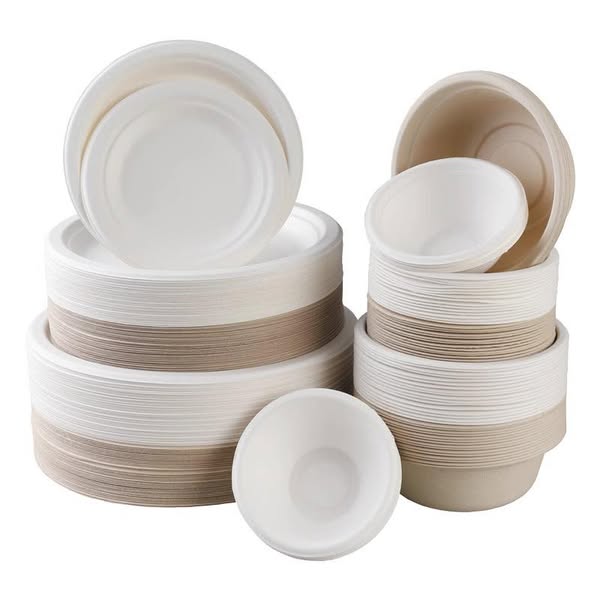
Buyers naturally express skepticism about new materials. The "soggy bottom" objection remains a primary concern for procurement teams. Without fluorinated chemical barriers, operators worry the bowls will fail. They fear wet ingredients will compromise the structural integrity. We must confront this skepticism directly using performance data.
Manufacturers now use advanced alternative barrier technologies. They achieve structural integrity through mechanical and biological innovations. Bio-based AKD (alkyl ketene dimer) sizing is a prime example. Engineers add AKD to the pulp during the molding process. It alters the surface tension of the fiber. This prevents liquids from absorbing rapidly. High-density pulp molding also plays a crucial role. Factories compress the sugarcane fiber under extreme heat and pressure. The resulting tight matrix physically blocks oil penetration. Some premium lines also incorporate natural plant-based wax coatings.
You should demand outcome-based metrics from your suppliers. Do not accept vague performance claims. PFAS-Free Bagasse Salad Bowls undergo rigorous laboratory testing. Define specific criteria for your menu. Measure oil hold-out time accurately. Test moisture resistance against harsh vinaigrettes and heavy cream-based dressings. Evaluate heavy-duty stacking strength. Delivery drivers stack multiple orders. The bottom bowl must support the weight without collapsing.
Consider the performance variations outlined in the chart below. It illustrates typical hold times and structural limits across different material categories.
| Material Category | Oil Hold-Out Time | Moisture Resistance (Acidic) | Stacking Strength |
|---|---|---|---|
| Legacy PFAS Bagasse | 24+ Hours | Excellent | High |
| Standard Untreated Paper | Under 15 Minutes | Poor | Low |
| Modern PFAS-Free Bagasse | 2 to 4 Hours | Good to Excellent | High |
| Recycled PET Plastic | Indefinite | Excellent | Medium (can crack) |
The data shows a clear operational window. Modern sugarcane fiber holds up perfectly for standard delivery times. Most takeout meals are consumed within two hours. The advanced mechanical compression easily sustains this timeline. You get the required performance without the chemical liability.
Procurement teams must understand industry terminology clearly. Defining "PFAS-Free" requires nuance. The industry distinguishes between "no intentionally added PFAS" and unavoidable background trace levels. Environmental contamination is everywhere. Rainwater and soil contain microscopic traces of these chemicals. Therefore, zero absolute parts per trillion is nearly impossible to guarantee. The legal and practical standard focuses on intentional addition during manufacturing. Reliable suppliers guarantee they do not add these chemicals to their formulas.
You must verify must-have certifications. Suppliers often make bold marketing claims. You need documented proof. Look for specific credentials on every specification sheet.
BPI Compostability: The Biodegradable Products Institute updated its standards. BPI certification now mandates strict total fluorine limits.
FDA and EFSA Compliance: Products must meet Federal Drug Administration or European Food Safety Authority rules. These rules govern direct food contact safety.
Third-Party Lab Testing: Demand independent laboratory results. Look specifically for Total Fluorine tests. This test burns the material to measure any residual fluorine gas.
Supply chain transparency protects your business. Advise your purchasing managers accordingly. They must request actual documentation. Do not rely on generic "eco-friendly" or "green" marketing stamps. Unscrupulous vendors sometimes print fake logos on packaging. A legitimate packaging partner will happily email you their lab results. They will provide their active BPI certification numbers. You can verify these numbers directly on the certifier's public database. This rigorous vetting process eliminates compliance risks entirely.
Switching your primary packaging material involves operational changes. You must set realistic baseline expectations for pricing. Cost realities dictate purchasing decisions. Modern sugarcane fiber carries a slight premium over traditional plastics. It may also cost slightly more than legacy coated papers. However, this upfront unit cost prevents massive future compliance fines. It also protects your brand equity. Consumers gladly pay a small premium for safe, sustainable takeout experiences.
Back-of-house storage requires attention. Bagasse is a natural fiber. It breathes and absorbs ambient moisture. Note specific storage and handling requirements. You must keep inventory in dry, climate-controlled environments. High-humidity commercial kitchens can cause untreated fiber to warp slightly over time. Keep the bowls sealed in their plastic shipping sleeves until needed. Do not store boxes directly on damp concrete floors. Elevate them on pallets or wire racks. These simple adjustments prevent unnecessary product degradation before use.
Implement a phased rollout strategy. Do not switch your entire inventory overnight. A sudden change can overwhelm kitchen staff. Recommend a pilot testing phase first. Select one or two high-volume locations. Have your staff test the bowls using the most demanding menu ingredients. Vinaigrettes, hot proteins, and heavy sauces push the limits of any container. Monitor how the bowls perform during rush hours. Gather feedback from delivery drivers regarding stacking stability. Ask regular customers about their experience. Once the pilot proves successful, you can confidently commit to a full inventory replacement.
Choosing the right supplier dictates your success. You need a partner capable of long-term support. Evaluate their manufacturing capacity carefully. Ensure the vendor can scale production alongside your business growth. A local supplier might offer great pricing but lack large-scale machinery. You need consistent quality across massive production runs. Differences in fiber density between batches cause performance failures. Ask potential partners about their quality control tolerances. How often do they calibrate their molding presses?
Establish a strict testing and sampling protocol. Prioritize suppliers who readily provide physical samples. Never buy a container based purely on a digital catalog. The vendor must supply verifiable lab data for structural and chemical testing.
Request a diverse sample kit covering multiple bowl sizes.
Conduct an in-house grease test using your hottest menu items.
Verify the provided compliance certificates against online databases.
Review their return policy regarding defective batches.
Finally, discuss customization capabilities. Brand visibility matters in food delivery. Custom branding on unbleached, molded fiber requires skill. Standard printing inks often contain harmful chemicals or reduce compostability. Discuss the feasibility of custom embossing instead. Factories can mold your logo directly into the lid or the bowl base. This creates a premium, tactile brand experience. It maintains the product's safety profile entirely. If you must use ink, ensure the vendor uses certified soy-based or water-based alternatives. A reliable partner will guide you through these customization options seamlessly.
Meeting rigorous safety standards does not require sacrificing operational efficiency. You can maintain beautiful food presentation while protecting your customers. Sugarcane fiber presents a highly functional, commercially viable alternative. It effectively resists grease and moisture for standard delivery windows.
The transition to safe, sustainable packaging is no longer optional. It is a baseline requirement for modern food service operations. Regulators will continue tightening restrictions. Consumers will continue demanding corporate transparency. Operators who adapt early gain a massive competitive advantage. They avoid fines and build deeper brand loyalty.
Take action immediately. Prompt your procurement managers to contact vetted suppliers. Request a detailed specification sheet and comprehensive compliance documentation. Order a physical sample kit today. Begin real-world menu testing in your own kitchens. Securing your supply chain now guarantees smooth operations for the future.
A: Modern molded fiber handles wet ingredients securely for 2 to 4 hours. This window perfectly suits standard delivery and takeout operations. Advanced bio-based sizing prevents rapid absorption. However, highly acidic vinaigrettes or boiling oils may shorten this timeframe. We highly recommend testing your specific acidic or oily dressings during a pilot phase.
A: Yes. Sugarcane fiber possesses excellent thermal tolerance. It generally handles hot foods very well and is usually microwave-safe. It insulates better than standard plastic. You must note, however, that extreme heat combined with high grease content can accelerate liquid absorption. Keep extremely hot, heavily oiled proteins separate from delicate greens when possible.
A: You must direct buyers to ask for specific third-party testing reports. Request a "Total Fluorine" lab test from an independent facility. Furthermore, look for recognized industry certifications. Updated BPI (Biodegradable Products Institute) standards strictly require zero intentionally added fluorinated chemicals for certification approval.


