+86-136-0073-8328 nancy.huang@geotegrity.com
- All
- Product Name
- Product Keyword
- Product Model
- Product Summary
- Product Description
- Multi Field Search


Views: 0 Author: Site Editor Publish Time: 2026-07-12 Origin: Site


Large-scale event catering presents a high-stakes reality. Professionals must balance aggressive sustainability mandates against the operational disaster of flimsy tableware. Standard paper or low-density molded pulp trays often buckle under heavy menus. They fail when serving moisture-rich foods. This structural failure risks the guest experience and significantly increases liability for caterers. Furthermore, traditional single-use plastics face increasing bans. They face outright rejection by eco-conscious corporate clients and event planners. You need a reliable, scalable solution. Heavy-Duty Bagasse Trays provide a commercially viable middle ground. They offer essential structural rigidity and thermal resistance. Crucially, they achieve this without compromising on compostability. When sourced intelligently, these items transform high-volume food service. You will learn how to evaluate performance metrics and select optimal compartment configurations. We will explore wholesale procurement and end-of-life realities to ensure your next event succeeds effortlessly.
Performance Thresholds: Heavy-duty bagasse trays successfully hold dense, high-moisture foods (curries, barbecue) for extended service windows without structural failure.
Design Utility: Multi-compartment configurations (e.g., 5-compartment designs) mitigate flavor mixing and streamline high-volume serving lines.
Implementation Reality: True eco-benefits rely on commercial composting infrastructure; vendor transparency regarding certifications (like BPI) is non-negotiable.
Procurement Strategy: Evaluating wholesale suppliers requires strict attention to case counts, minimum order quantities (MOQs), and quality assurance batch testing.
Caterers understand the nightmare of sudden tray failures. Dropped food ruins expensive clothing and damages venue floors. Replacing dropped meals wastes precious inventory. Low-quality trays consistently cause these hidden operational drains. Paying a slightly higher unit cost for dense bagasse stops this leakage entirely. You save money simply by eliminating the need for double-plating. Guest complaints drop instantly.
Material science explains this impressive strength perfectly. Manufacturers press sugarcane fibers under immense heat and pressure. This high-density molding yields incredible rigidity. It mirrors the reliable feel of premium plastics or rigid foam. Yet, it leaves behind no environmental toxicity. It relies entirely on renewable agricultural byproducts. Sugarcane regenerates rapidly. Using the remaining pulp prevents agricultural waste.
Guests notice this tactile difference immediately. Tactile sturdiness signals premium quality to attendees. When a guest holds a firm tray, they perceive the catered food as higher value. This aligns your event execution strictly with modern sustainability standards. It protects your brand reputation.
Reduced Liability: Sturdy bases prevent hot liquid spills on guests.
Operational Speed: Staff can carry multiple trays securely during rapid service.
Aesthetic Appeal: Bleached or natural unbleached options match upscale rustic themes perfectly.
Investing in superior material prevents cascading failures during peak service times. You avoid the chaos of replacing broken plates while hundreds wait in line.
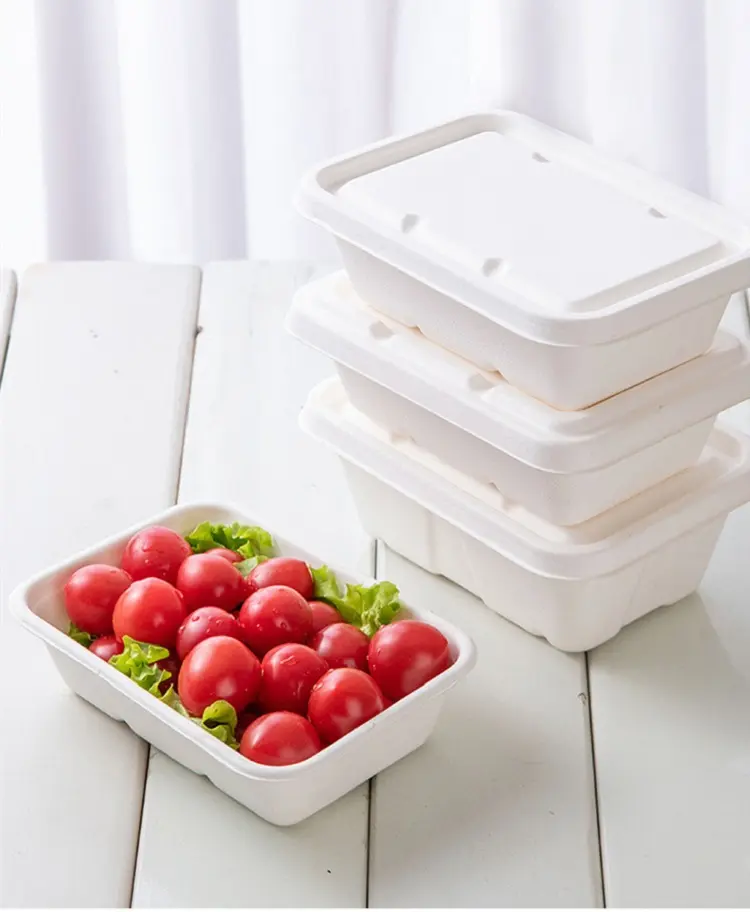
Load bearing matters immensely in standing-room events. Structural integrity relies heavily on minimum grammage. Standard catering loads easily exceed two pounds per guest. You need dense fiber compression to support this weight single-handedly. A flimsy tray folds quickly. A heavy-duty option holds firm under the pressure of thick cuts of meat and heavy sides.
Consider moisture and grease resistance carefully. Bagasse handles difficult foods beautifully. However, we must discuss its limitations transparently. Sugarcane fiber resists liquids strongly. It is not completely impervious over multiple days. You must establish safe service windows. For wet foods like soups or heavy sauces, performance peaks within 12 to 24 hours. Oil-heavy items behave similarly. Plan your prep timelines accordingly to maintain optimal presentation.
Thermal tolerance provides another massive operational advantage. You can safely place these products in commercial microwaves. They handle rapid reheating seamlessly. They maintain integrity in hot-holding scenarios up to 200°F (93°C). Event prep environments demand this flexibility. Kitchen staff can pre-plate meals, hold them in warming cabinets, and serve them directly.
Bagasse Tray Performance Benchmarks
| Performance Metric | Standard Requirement | Heavy-Duty Best Practice Limit |
|---|---|---|
| Weight Capacity | 0.5 - 1.0 lbs | 2.5+ lbs (Single-hand carry) |
| Thermal Tolerance | Up to 150°F | Up to 200°F (Microwave Safe) |
| Moisture Resistance | 1 - 2 hours | 12 - 24 hours (Depends on acidity) |
| Grease Resistance | Immediate serving only | Up to 12 hours (PFAS-free barriers) |
Complex menus dictate precise tray designs. Multi-compartment trays solve demanding serving challenges instantly. Event planners often utilize three to five compartments. They separate wet sauces from crisp textures. They prevent cross-contamination between distinct flavor profiles. High-volume serving lines move considerably faster. Staff know exactly where each specific item belongs.
Transporting these meals introduces another massive hurdle. Off-site catering demands secure lids. You must evaluate lid compatibility carefully. Bagasse lids offer an entirely eco-friendly seal. However, PET options provide visibility and tighter snap-fits. Choose your lid material based on transit distances and heat retention needs. A tight seal prevents messy leaks inside catering delivery vans.
Stackability matters greatly when loading vehicles. Standardized dimensions simplify everything. Precise tray sizing aids portion control directly. You manage food costs much better. Every single guest receives a visually consistent plate. A five-compartment tray forces staff to use exact scoop sizes. Scalability requires this uniformity. It prevents over-serving expensive proteins. It ensures vegetable sides look abundant.
Marketing fluff confuses many buyers today. You must thoroughly understand the difference between biodegradable and compostable. Everything eventually degrades over centuries. "Biodegradable" means very little legally. "Compostable" guarantees breakdown within a specific timeframe under specific conditions. True ecological benefits require proper infrastructure.
Heavy-duty bagasse rarely breaks down quickly in standard backyard bins. It requires commercial composting facilities. You must coordinate waste management post-event. Ensure local haulers accept these materials. Throwing compostable materials into regular landfills defeats the entire purpose. Landfills lack the oxygen required for proper decomposition. This leads to methane off-gassing.
Compliance protects your operational liability. Certifications verify environmental claims legally. Always demand BPI certification or OK Compost verification. Furthermore, insist on PFAS-free declarations. Older manufacturing processes used these "forever chemicals" for grease resistance. Modern standards forbid them. Satisfying corporate or municipal event requirements depends entirely on these strict verifications.
Evaluating B2B suppliers requires strict criteria. Shortlist vendors based on manufacturing consistency. Demand complete supply chain transparency. Ask exactly where they source their raw sugarcane. Reliable material sourcing prevents weak batches. You cannot afford a bad batch during a thousand-person gala.
Bulk economics govern wholesale purchasing. Standard packaging usually involves cases of 400 to 500 pieces. Pallet-level ordering drastically impacts your landed costs. Optimize your freight expenses by ordering full pallets. Sea freight offers substantial discounts for bulk orders. Plan your procurement calendar months in advance.
Never commit to large purchase orders blindly. Procurement managers must demand physical samples first. Real-world testing prevents catastrophic mistakes. Heavy-Duty Bagasse Trays vary by manufacturer.
Follow this rigorous sample testing protocol:
Request a mixed case of various compartment sizes and lid types.
Load the samples heavily with your wettest and greasiest menu items.
Hold the plated food at serving temperatures for two full hours.
Test the microwave durability by reheating the samples on maximum power.
Evaluate the lid snap-fit after extreme heat exposure to ensure no warping.
You must stress-test products thoroughly before relying on them during a live event.
Heavy-duty bagasse trays represent a highly functional upgrade for demanding catering environments. They are far more than a simple eco-alternative. They prevent structural failures. They elevate the guest experience through tactile sturdiness. They streamline complex plating through intelligent compartment designs.
Take immediate action to improve your operations. Audit your current menu weights accurately. Identify the specific compartment layouts required for your signature dishes. Reach out to certified wholesale manufacturers. Request comprehensive spec sheets and physical samples. Stress-test these samples rigorously. Upgrading your tableware ensures your next large-scale event executes flawlessly while meeting every sustainability goal.
A: They typically maintain integrity for 12 to 24 hours. Performance depends heavily on the food's temperature and acidity. Hot, highly acidic foods degrade the fibers faster. While highly resistant, performance will naturally degrade over prolonged exposure. Always plate wet foods as close to service time as possible.
A: Yes, they are highly thermally tolerant. They handle reheating well and remain safe in microwaves up to 200°F (93°C). They also survive standard freezing. However, they may become slightly brittle if subjected to deep-freezing for extended periods. Always thaw them carefully.
A: The industry has shifted significantly away from PFAS. However, older or cheaper inventory may still use them for grease resistance. You must explicitly request PFAS-free certified lines from your supplier. Modern heavy-duty options use alternative, safe bio-coatings to achieve excellent grease resistance.
A: Yes, custom branding is highly feasible. Manufacturers typically use embossing directly into the mold rather than ink printing. This keeps the product fully compostable. Because it requires creating a custom mold, minimum order quantities (MOQs) are usually quite high. Expect MOQs around 50,000 to 100,000 pieces.


