+86-136-0073-8328 nancy.huang@geotegrity.com
- All
- Product Name
- Product Keyword
- Product Model
- Product Summary
- Product Description
- Multi Field Search


Views: 0 Author: Site Editor Publish Time: 2026-08-29 Origin: Site


Increasing regulatory bans on single-use plastics and intense consumer scrutiny force food service operators to adapt quickly. Restaurants and caterers must definitively abandon traditional EPS (Styrofoam) and petroleum plastics to survive today's market. However, a major problem exists for operators seeking sustainable replacements. The packaging market now overflows with "greenwashed" alternatives. Many of these substitutes fail operationally, frustrating customers through soggy bottoms, leaky seams, and poor heat retention. Furthermore, some seemingly eco-friendly options carry hidden compliance risks tied to toxic chemical additives. This guide provides a clear, procurement-focused evaluation framework. You will learn how to identify takeaway packaging solutions perfectly balancing environmental integrity, viable unit economics, and robust structural performance. We will help you discover actionable strategies for navigating complex regulations while maintaining high operational standards.
Assessing takeaway packaging requires balancing three factors: end-of-life disposal realities, functional performance (heat/grease resistance), and unit cost.
While Kraft paper and PLA (bioplastics) serve specific niches, bagasse material offers the most viable structural alternative to plastic for hot, heavy, or wet foods.
Regulatory compliance is actively shifting; sourcing a PFAS-free bagasse clamshell or certified compostable container is now a strict requirement to avoid liability and brand damage.
Successful implementation requires auditing local commercial composting infrastructure and testing sample runs before bulk procurement.
Procuring sustainable food packaging requires more than just reading marketing labels. Operators must evaluate materials using a rigorous framework. This approach protects your bottom line and ensures your brand keeps its environmental promises.
You must shift away from generic "biodegradable" claims. The term biodegradable lacks strict regulatory timelines. Technically, even standard plastics degrade over centuries. Instead, focus your procurement on measurable, certified standards. Look for BPI-certified compostable labels, high recycled content percentages, and a low carbon footprint during manufacturing. Certified compostable materials break down in commercial facilities within 90 to 180 days. They leave behind nutrient-rich soil rather than toxic microplastics. Verifiable certifications protect your business from greenwashing accusations.
Sustainability means nothing if the packaging fails to do its primary job. Takeaway containers must hold food securely during transit. If a container collapses, leaks, or turns soggy, food waste increases dramatically. This operational failure negates any environmental benefits gained from using eco-friendly materials. Spilled food also damages customer retention. Consumers will not reorder from a restaurant if their meal arrives ruined. Therefore, functional performance directly dictates true sustainability. A reliable container ensures the food is eaten, not discarded.
Transitioning to eco-friendly packaging involves assessing the cost-per-unit transition. You must look beyond the initial invoice price. Sustainable containers often carry a higher upfront cost compared to styrofoam. However, you can offset these expenses through potential savings elsewhere. Municipalities frequently charge lower waste management fees for compostable waste streams. Additionally, premium eco-friendly packaging elevates your brand positioning. Customers consistently show a willingness to pay slightly higher menu prices for sustainable practices. You can strategically adjust your pricing to absorb the packaging transition costs while building brand loyalty.
Demand third-party compostability certificates from your suppliers.
Conduct a 30-minute transit simulation test with your hottest menu item.
Calculate the cost difference per meal rather than per case to understand true margins.
The market offers several viable alternatives to traditional plastics. Each material possesses unique strengths and operational limitations. Understanding these differences helps you make informed procurement decisions.
PLA comes from renewable resources like corn starch. It looks and feels remarkably similar to traditional petroleum plastic.
Pros: PLA offers excellent clear visibility. This makes it ideal for cold foods, salads, and visually appealing desserts. It forms a strong moisture barrier.
Cons: The material melts or warps under high heat. You cannot use it for hot soups or fresh cooked meals. Furthermore, PLA relies heavily on commercial composting facilities. If thrown in a standard landfill, it often acts exactly like regular plastic and fails to decompose efficiently.
Kraft paper presents a rustic, organic look. Consumers easily recognize it as an eco-friendly option.
Pros: Unlined paper is highly recyclable. It feels familiar to consumers and generally maintains a low unit cost.
Cons: Paper naturally absorbs moisture. To handle wet or greasy foods, manufacturers must coat the paper. They often use synthetic or plastic-based linings (like PE). These linings contaminate the recycling stream. Consequently, lined paper boxes complicate end-of-life disposal and often end up in landfills.
Aluminum serves as a traditional choice for heavy, hot meals. Many catering services rely on it.
Pros: Aluminum boasts infinite recyclability. It never loses quality during the recycling process. It also provides excellent heat retention for long deliveries.
Cons: Mining and refining aluminum requires energy-intensive production. The material is fundamentally not microwave-safe, which frustrates consumers looking to reheat leftovers. Finally, it carries a noticeably higher unit cost compared to fiber-based options.
By utilizing Bagasse Material, you transform agricultural waste into high-performance packaging. Sugarcane stalks undergo crushing to extract juice. The fibrous residue left behind becomes bagasse pulp.
Pros: This material utilizes an existing agricultural byproduct. It prevents waste burning. Bagasse offers excellent thermal properties, remains naturally compostable, and provides a highly rigid structure.
Cons: Historically, molded fiber relied on added chemicals (PFAS) to achieve grease resistance. However, modern manufacturing now necessitates and provides PFAS-free alternatives to ensure safety.
Comparison Chart: Sustainable Packaging Materials Overview
| Material Type | Best For | Heat Resistance | End-of-Life Disposal |
|---|---|---|---|
| PLA Bioplastic | Cold salads, smoothies, fruit | Low (melts easily) | Commercial compost only |
| Kraft Paper (Lined) | Sandwiches, dry baked goods | Medium | Often landfilled due to plastic lining |
| Aluminum | Catering, baked pasta | High (Not microwaveable) | Highly recyclable (if clean) |
| Sugarcane Bagasse | Hot foods, liquids, heavy meals | High (Microwave safe) | Commercially & home compostable |
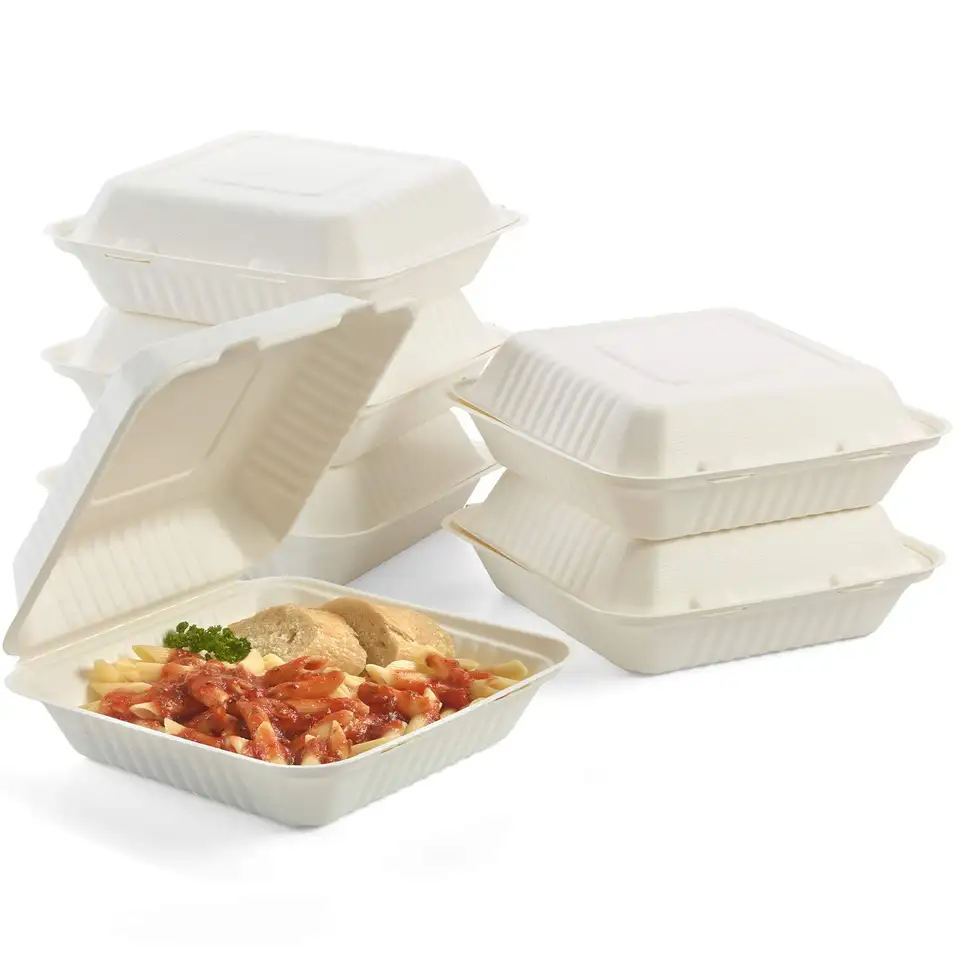
When serving demanding menu items, packaging must perform flawlessly. Soups, curries, and grain bowls challenge the limits of standard containers. A high-quality Bagasse Bowl rises to this challenge better than almost any other sustainable material.
The secret lies in the manufacturing process. Manufacturers mold sugarcane pulp under high heat and pressure. This creates a highly dense fiber matrix. This dense matrix actively prevents warping and sagging. When you pour a heavy, liquid-dense dish into molded fiber, the container holds its shape. You can confidently pack hot soups, heavy grain bowls, and oily curries without fearing immediate degradation. The structural rigidity also allows for secure stacking during busy delivery runs. Delivery drivers can stack multiple meals without crushing the bottom orders.
Consumer convenience drives repeat business. Unlike standard paper or bioplastics, bagasse maintains superior structural stability under high heat. It does not sweat excessively or become brittle. More importantly, these containers allow end-consumers to safely reheat meals. People can place molded fiber directly into the microwave. The container will not melt, spark, or leach harmful chemicals into the food during reheating. This thermal resilience makes it the premier choice for premium takeout experiences.
True sustainability examines the entire life-cycle of a product. Bagasse offers a massive life-cycle advantage by upcycling a sugarcane byproduct. We do not need to harvest virgin tree fibers to create it. We also avoid relying on extracted fossil fuels. By giving a second life to agricultural waste, manufacturers prevent the open-air burning of sugarcane stalks. This significantly reduces carbon emissions and air pollution at the agricultural source.
Avoid storing bagasse products in highly humid environments, as they may absorb ambient moisture over long periods.
Do not confuse bagasse with standard paper plates; bagasse handles liquids much better due to its fiber density.
The regulatory landscape for food packaging is changing rapidly. Governments worldwide are cracking down on hazardous chemicals. Staying compliant protects your business from heavy fines and severe brand damage.
For decades, the packaging industry relied on "forever chemicals" known as PFAS (per- and polyfluoroalkyl substances). Manufacturers added PFAS to molded fiber packaging to provide superior oil and water resistance. Unfortunately, these chemicals do not break down in nature. They accumulate in the environment, water supplies, and human bodies. Due to severe health concerns, regulatory bodies face massive pushback. Many US states and European countries have strictly banned the intentional addition of PFAS in food contact materials. Continuing to use older, non-compliant packaging exposes your business to massive legal liability.
You must ensure every Bagasse Box you purchase meets updated FDA and EU food contact regulations. Modern manufacturers achieve oil resistance through innovative, non-toxic barrier coatings or structural densification. When speaking with suppliers, you must demand clear proof of compliance. Ask specifically for laboratory testing results showing no intentionally added fluorine. Do not accept vague verbal promises regarding chemical safety.
Certifications act as your primary defense against non-compliant products. You should always check for credible, third-party validation. Look for the BPI (Biodegradable Products Institute) certification or the OK Compost label. These organizations test products rigorously. They ensure a PFAS-Free Bagasse Clamshell breaks down completely. More importantly, they verify the product leaves absolutely no toxic soil residue behind after degradation. Regional standards may vary, so familiarize yourself with the specific compostability marks required in your operating area.
Changing your packaging supply chain requires careful planning. A rushed transition leads to operational bottlenecks and frustrated staff. Follow a logical shortlisting process to ensure seamless integration.
Start by auditing your entire menu. You must match specific packaging shapes to specific food types. A single container style rarely works for every dish. For example, bento-style meals with distinct sides require separation. A multi-compartment Bagasse Tray prevents cross-contamination of flavors and textures. Conversely, ramen or pho requires deep, leak-resistant bowls with tight-fitting lids. Map out exactly what sizes and shapes your menu demands before ordering anything.
Switching packaging introduces new operational variables. You must manage these risks proactively.
Staff Training: Train your kitchen staff on new assembly or folding requirements. Clamshell tabs or separate lid mechanisms might take a few extra seconds to close properly. Speed matters during dinner rushes.
Storage Footprints: Molded fiber stacks differently than ultra-thin nested plastics. Bagasse containers typically require slightly more shelf space. Measure your dry storage areas to accommodate the new inventory footprint.
Customer Communication: Communicate the packaging change clearly to your customers. Use social media, menu inserts, or window decals. Explaining the environmental benefits helps justify any potential menu price adjustments you made to cover the transition.
Never buy sustainable packaging blindly based on a website description. You must vet your vendors thoroughly. Request detailed product specification sheets. Verify independent laboratory testing for chemical compliance, specifically focusing on PFAS absence. Finally, order sample packs for real-world stress testing. Put your hottest, greasiest food into the samples. Let them sit for a 45-minute hold time. Drive them around in a car to simulate transit conditions. Only authorize bulk procurement after the packaging passes your real-world tests.
The most eco-friendly packaging does much more than degrade in a compost facility. It actively prevents food waste by performing flawlessly during transit. It utilizes rapidly renewable resources, upcycling agricultural byproducts instead of depleting virgin forests. Most importantly, it guarantees a clear, non-toxic end-of-life path that enriches the soil rather than polluting it.
To successfully upgrade your operations, start by conducting a comprehensive menu audit. Identify the specific container shapes and thermal requirements your food demands. Next, contact reputable suppliers and request certified, chemical-free bagasse samples. Run these samples through rigorous kitchen stress tests. By prioritizing verifiable certifications and real-world performance, you can transition your business to sustainable packaging confidently and profitably.
A: Yes, the initial unit cost is often slightly higher than standard petroleum plastic. However, bulk purchasing significantly reduces this price gap. Furthermore, operators often see a high return on investment through increased brand value. Customers increasingly prefer and remain loyal to restaurants demonstrating genuine environmental responsibility.
A: Many unlined bagasse products are backyard compostable, breaking down over several months in a well-managed home pile. However, you should always check the specific product certifications. Some thicker containers require the higher sustained heat of a commercial composting facility to break down efficiently within 90 days.
A: Yes, unlined bagasse boasts excellent temperature tolerance. It remains perfectly safe for microwave reheating, as it will not melt or release harmful toxins into the food. It also performs well in the freezer for short-term storage without becoming overly brittle, unlike some bioplastics.
A: You must ask your manufacturer for specific documentation. Request independent laboratory test results confirming no intentionally added fluorine. Additionally, look for trusted third-party certifications like BPI or OK Compost. These organizations strictly prohibit PFAS and test products thoroughly before granting their compostable seals of approval.


