+86-136-0073-8328 nancy.huang@geotegrity.com
- All
- Product Name
- Product Keyword
- Product Model
- Product Summary
- Product Description
- Multi Field Search


Views: 0 Author: Site Editor Publish Time: 2026-01-31 Origin: Site


As sustainability becomes a core priority across the global packaging industry, manufacturers and food-service suppliers are actively seeking alternatives to traditional plastic and paper-based tableware. Among the most promising solutions is sugarcane-based packaging—particularly products like custom take away sugarcane bagasse bowls and plates. Made from agricultural byproducts, these eco-friendly food containers combine performance, safety, and environmental responsibility into a single material solution.
For factories producing disposable food packaging, adopting sugarcane plates is no longer just an environmental statement—it is a strategic business decision. Rising regulations on single-use plastics, shifting consumer preferences, and growing demand from food brands for compostable packaging are reshaping the market. Sugarcane bagasse tableware addresses these challenges while offering reliable strength, heat resistance, and manufacturing flexibility.
In this article, we explore the key benefits of sugarcane plates and how custom take away sugarcane bagasse bowls are transforming industrial food packaging. We also examine their performance, production advantages, and why they are becoming a preferred material choice for factories supplying modern food-service markets.
Sugarcane plates are disposable tableware products made from bagasse—the fibrous residue left after extracting juice from sugarcane stalks. Instead of being burned or discarded as waste, bagasse is processed into pulp, molded into plates, bowls, trays, and containers, and dried into sturdy, food-safe packaging products.
Custom take away sugarcane bagasse bowls are specifically designed for takeaway and delivery applications. They provide structural integrity, leak resistance, and heat tolerance while remaining compostable and biodegradable.
One of the most significant advantages of sugarcane plates is their environmental sustainability. These products are made from bagasse, a renewable agricultural byproduct generated after extracting juice from sugarcane. Instead of being burned or discarded as waste, bagasse is repurposed into durable food packaging materials. This process not only reduces landfill waste but also lowers dependence on petroleum-based plastics, helping to conserve non-renewable resources.
Sugarcane plates are:
Fully biodegradable
Compostable under industrial conditions
Free from plastic coatings
Made from renewable resources
From a factory perspective, this sustainability advantage is more than an environmental benefit—it represents a strategic business opportunity. Governments worldwide are tightening regulations on single-use plastics, and food-service brands are actively seeking certified compostable packaging alternatives. By manufacturing sugarcane plates and custom take away sugarcane bagasse bowls, factories can align their product lines with global sustainability goals while maintaining competitive production costs.
In addition, using agricultural byproducts improves material efficiency and supply stability. Unlike petroleum-based plastics, which are subject to energy price volatility and regulatory pressure, bagasse is widely available in sugar-producing regions and offers long-term raw material security for industrial-scale production. This stability helps factories manage procurement risks and reduce exposure to fluctuating oil prices.
Moreover, sugarcane bagasse packaging enhances brand positioning for downstream customers by supporting eco-friendly marketing claims. This growing demand for sustainable food packaging creates long-term growth potential for manufacturers investing in bagasse-based product lines.
Despite being plant-based, sugarcane plates and custom take away sugarcane bagasse bowls offer impressive mechanical strength. They are rigid enough to handle hot foods, liquids, and greasy contents without bending, collapsing, or leaking. This durability makes them suitable for demanding food-service environments where packaging reliability is critical.
Key performance features:
Feature | Performance Benefit |
Structural rigidity | Maintains shape under heavy food loads |
Heat resistance | Safe for hot meals and microwave reheating |
Oil and water resistance | Prevents leaks and soggy packaging |
Impact tolerance | Resists cracking during transport and stacking |
These properties make sugarcane plates ideal for meal prep services, takeaway and delivery operations, airline catering, institutional food supply, and large-scale catering events. For factories supplying food brands, this durability reduces customer complaints, minimizes packaging failure rates, and supports consistent product quality.
In production environments, strong packaging materials also improve handling efficiency. Sugarcane plates stack well, resist deformation during packing, and maintain integrity during shipping. This helps reduce breakage, lowers logistics losses, and improves overall supply chain reliability.
Sugarcane bagasse plates are manufactured without harmful chemicals, plastic linings, or toxic additives. They are typically:
PFAS-free
BPA-free
Non-toxic
Odorless and tasteless
This makes them safe for direct food contact and suitable for both hot and cold foods. Unlike plastic containers that may release chemicals under heat, sugarcane plates maintain their structural stability and do not transfer unwanted flavors or odors to food.
For factories, this food safety profile simplifies regulatory approvals and strengthens product positioning in export markets. Many regions require strict compliance with food-contact safety standards, and sugarcane bagasse packaging meets these requirements without the need for additional chemical coatings.
In addition, food brands increasingly prefer packaging that supports clean-label and health-conscious marketing. Using chemical-free sugarcane plates allows manufacturers to meet customer demand for safer, more natural packaging materials while maintaining industrial-grade performance.
Unlike paper plates that become soggy or plastic containers that deform under heat, sugarcane plates maintain stability across a wide temperature range. Their dense fiber structure provides natural resistance to moisture, oils, and heat.
They can be used for:
Hot meals and soups
Cold desserts and salads
Greasy and saucy dishes
Microwave reheating
Custom take away sugarcane bagasse bowls are especially effective for soups, curries, noodles, and rice dishes, where leak resistance and heat stability are essential. Their ability to hold liquids without softening or leaking makes them highly reliable for takeaway and food delivery services.
From a factory production standpoint, this multi-functional performance reduces the need for multiple packaging SKUs. A single sugarcane bowl design can be used across different food categories, simplifying inventory management and improving manufacturing efficiency.
From a factory perspective, customization is a major advantage of sugarcane plates and custom take away sugarcane bagasse bowls. These products can be molded into a wide variety of shapes, sizes, depths, and surface textures, allowing manufacturers to meet the specific requirements of different food brands and service models. This flexibility supports both functional performance and brand differentiation.
Customization options include:
Bowl volume and depth
Plate diameter and thickness
Compartment layouts
Brand embossing
Surface textures
By offering customizable molding, factories can serve multiple customer segments—from fast-food chains to premium takeaway brands—using the same core production technology. This reduces tooling complexity while enabling tailored product designs. Custom embossing also enhances brand visibility without additional labeling, making sugarcane packaging both a functional and marketing asset for food-service businesses.
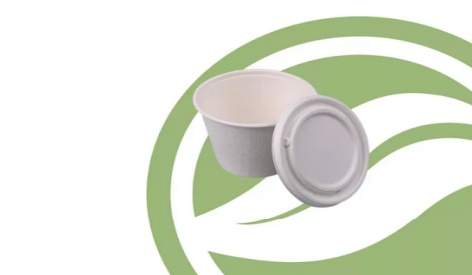
Custom take away sugarcane bagasse bowls provide factories with scalable production efficiency and market adaptability.
Compatible with automated molding equipment
Short production cycles
High material yield
Low raw material costs
Minimal finishing processes
Stackable for efficient storage
Lightweight for reduced shipping costs
Low breakage rates during handling
High demand from food-service brands
Strong sustainability appeal
Suitable for export markets
Material Type | Environmental Impact | End-of-Life Option |
Plastic plates | High pollution, fossil-based | Landfill or incineration |
Coated paper plates | Limited recyclability | Landfill |
Sugarcane bagasse plates | Renewable, low carbon footprint | Compostable |
Sugarcane packaging is widely used in:
Takeaway and delivery services
Airline and railway catering
Corporate cafeterias
Hospitals and schools
Event catering
Food manufacturing plants
Custom take away sugarcane bagasse bowls are especially valuable for food brands focused on sustainability-driven packaging solutions.
Factories are shifting toward sugarcane plates because they offer a balance of performance, sustainability, and production efficiency. Governments worldwide are implementing plastic bans, while food brands demand compostable alternatives that do not compromise quality.
Sugarcane packaging enables manufacturers to:
Enter premium sustainable markets
Comply with environmental regulations
Reduce long-term material risks
Strengthen brand positioning
Sugarcane plates and custom take away sugarcane bagasse bowls offer a practical, sustainable, and high-performance alternative to plastic and coated paper tableware. From eco-friendly sourcing and strong durability to food safety and production scalability, these products address both environmental and industrial demands.
For factories supplying modern food-service markets, sugarcane packaging is not just a trend—it is a future-proof solution. It supports regulatory compliance, meets customer sustainability expectations, and delivers consistent functional performance.
At GeoTegrity Eco Pack (Xiamen) Co., Ltd., we specialize in manufacturing high-quality custom take away sugarcane bagasse bowls and sugarcane plates tailored to industrial packaging needs. Our solutions are designed to support efficient production, consistent quality, and long-term sustainability. If you are exploring eco-friendly packaging alternatives, we are ready to help you develop reliable sugarcane-based packaging solutions for your market.
1. What are sugarcane plates made from?
Sugarcane plates are made from bagasse, a fibrous byproduct of sugarcane processing that is molded into biodegradable tableware.
2. Are custom take away sugarcane bagasse bowls leak-proof?
Yes, they are naturally oil- and water-resistant, making them suitable for soups, sauces, and greasy foods.
3. Can sugarcane plates be used in microwaves?
Yes, sugarcane plates and bowls are microwave-safe and heat-resistant.
4. Are sugarcane plates suitable for large-scale food packaging factories?
Yes, sugarcane packaging is compatible with automated production systems and scalable manufacturing processes.


